Notice: Function _load_textdomain_just_in_time was called incorrectly. Translation loading for the modern-events-calendar-lite domain was triggered too early. This is usually an indicator for some code in the plugin or theme running too early. Translations should be loaded at the init action or later. Please see Debugging in WordPress for more information. (This message was added in version 6.7.0.) in /home/bellafr3/debug.bellafricana.com/wp-includes/functions.php on line 6170

Notice: Function _load_textdomain_just_in_time was called incorrectly. Translation loading for the seedprod-notification-bar-pro domain was triggered too early. This is usually an indicator for some code in the plugin or theme running too early. Translations should be loaded at the init action or later. Please see Debugging in WordPress for more information. (This message was added in version 6.7.0.) in /home/bellafr3/debug.bellafricana.com/wp-includes/functions.php on line 6170
From Rebrand to Radiance: The Timeless Elegance of Moelle Essentials - Bellafricana

From Rebrand to Radiance: The Timeless Elegance of Moelle Essentials

How Doyinsola Ogbeifun is redefining occasion wear with a focus on fit, femininity, and confidence
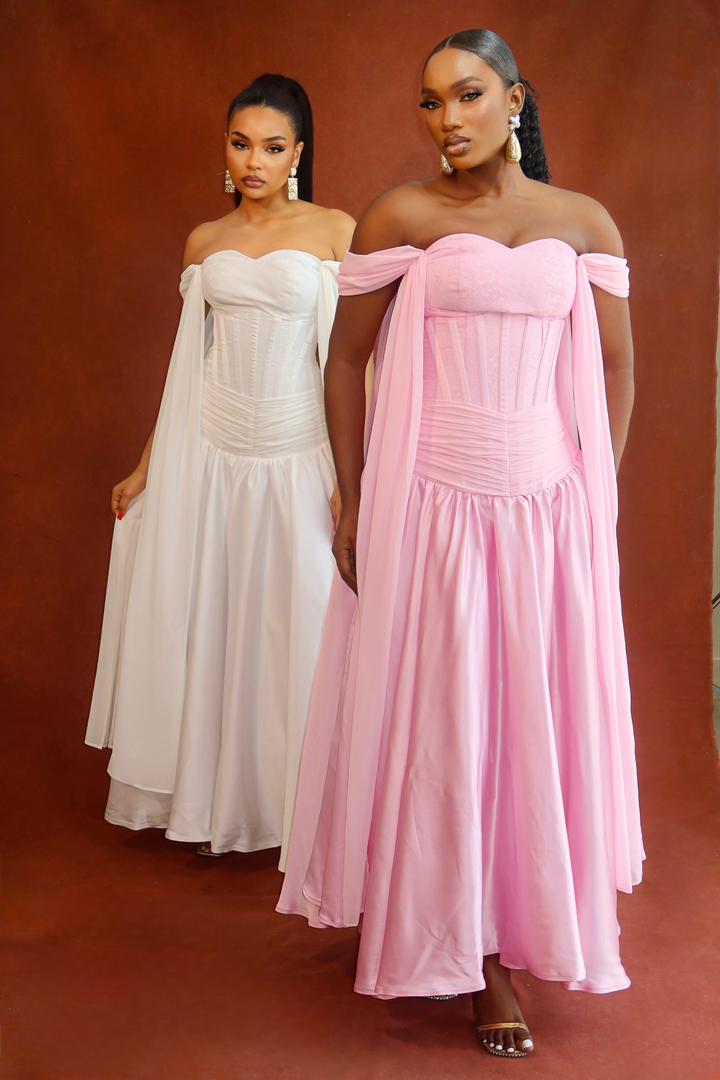


When you meet Doyinsola Ogbeifun, founder of Moelle Essentials, there’s an instant calm that draws you in, the kind that comes from someone who understands grace, structure, and the quiet power of confidence.

Her journey into fashion wasn’t a loud or impulsive one. It was built over time, shaped by observation, curiosity, and an ever-present desire to create clothes that make women feel as good as they look.

A Pause, A Rebirth

Moelle Essentials first came to life in 2018, born from Doyinsola’s vision to design elegant, well-fitted pieces for women of all shapes and sizes. But as with most creative journeys, there was a moment of pause — a three-year break that became a period of reflection and rediscovery.

In 2022, Moelle Essentials returned rebranded, refocused, and ready to redefine occasion wear.

The brand found its rhythm again, this time with a clearer purpose: to celebrate diverse body types through elegant, accessible designs that don’t compromise on quality or comfort.


Fashion That Fits Every Woman

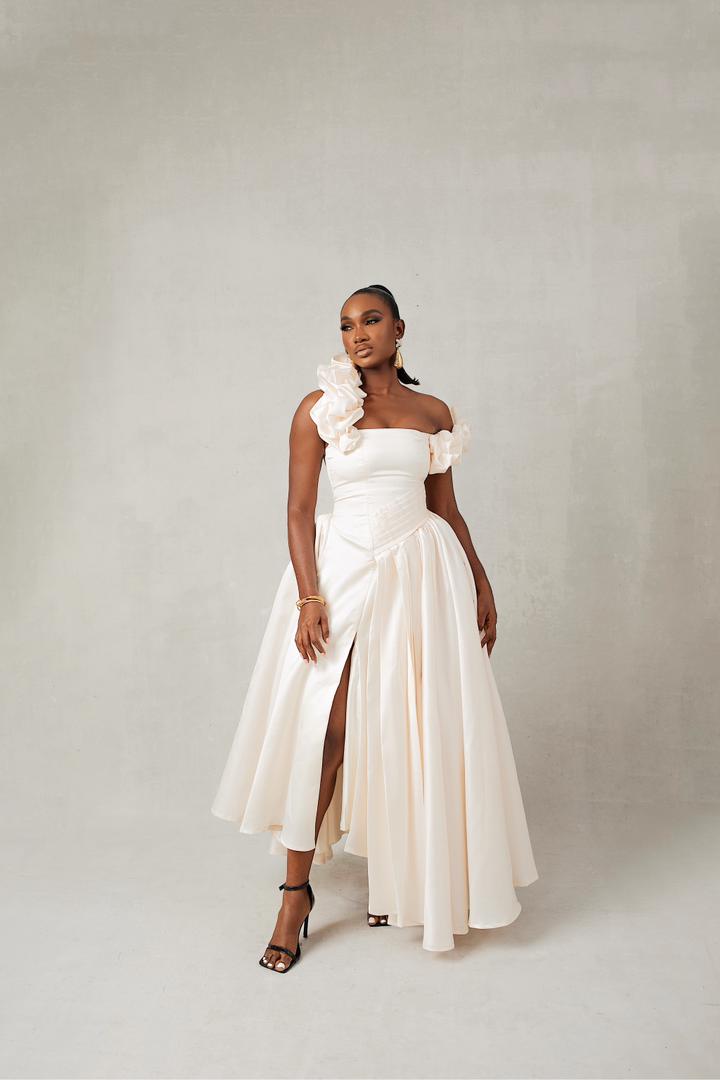
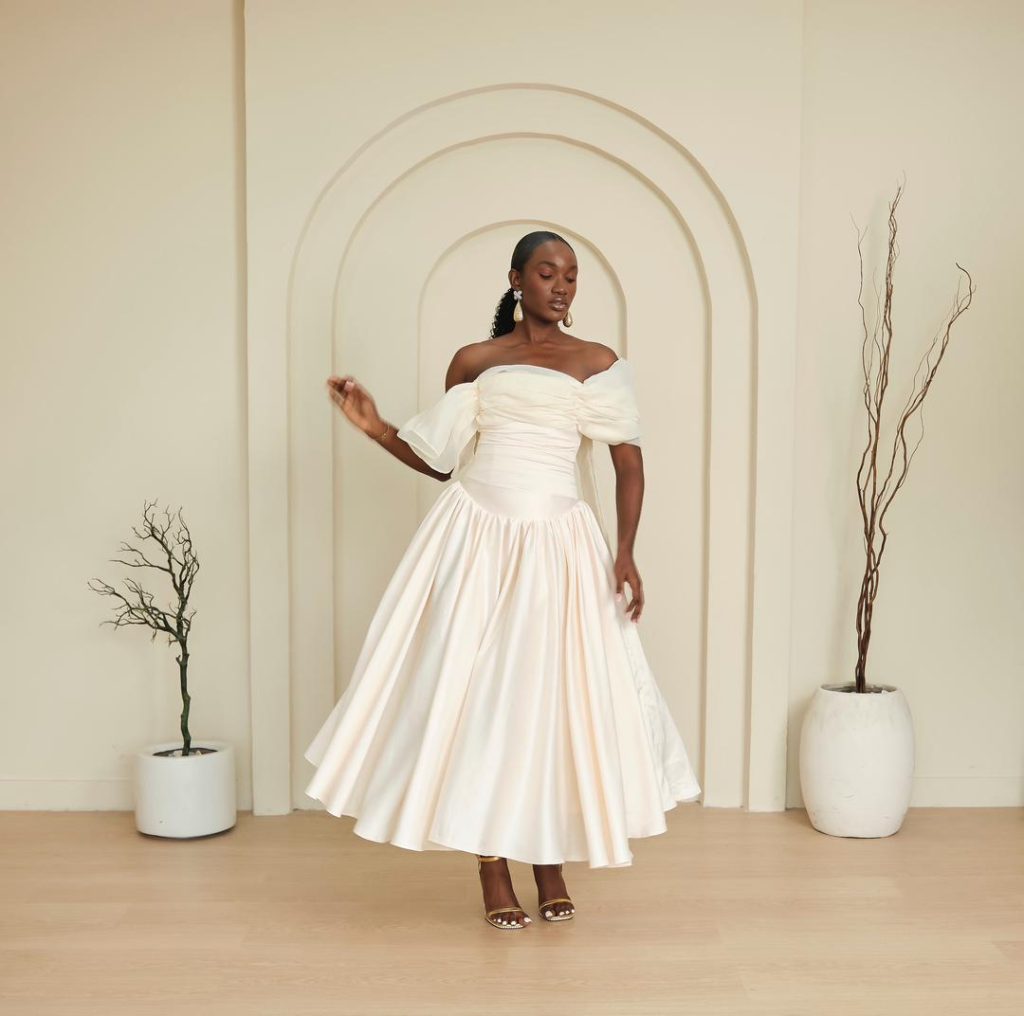
Walk into Moelle Essentials’ world, and you’ll find pieces that speak of balance, classic yet modern, bold yet feminine. From flowing dresses that move like poetry to structured fits that celebrate the body’s natural silhouette, every design is made to make women stand tall.

Whether you’re petite, curvy, or tall, Moelle offers both ready-to-wear (RTW) and made-to-measure pieces. The goal? To eliminate the struggle of finding occasionwear that truly fits.

As Doyinsola puts it,

“Elegance should never be a privilege. It should be accessible — and it should fit.”

The Moelle Woman
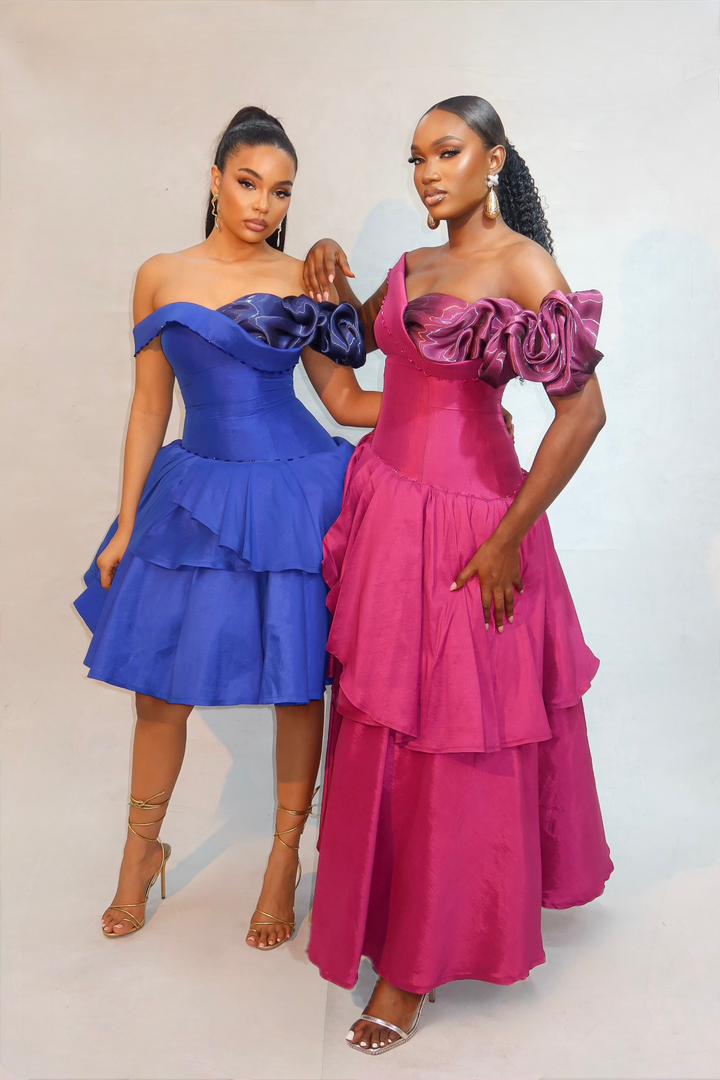


The Moelle woman knows her worth. She loves sophistication without shouting it. She values quality but also seeks versatility. And above all, she wears her confidence like her favourite dress effortlessly.

Every piece by Moelle Essentials is designed with that woman in mind. From the first sketch to the final stitch, Doyinsola ensures that comfort, style, and precision go hand-in-hand.

Redefining Occasionwear

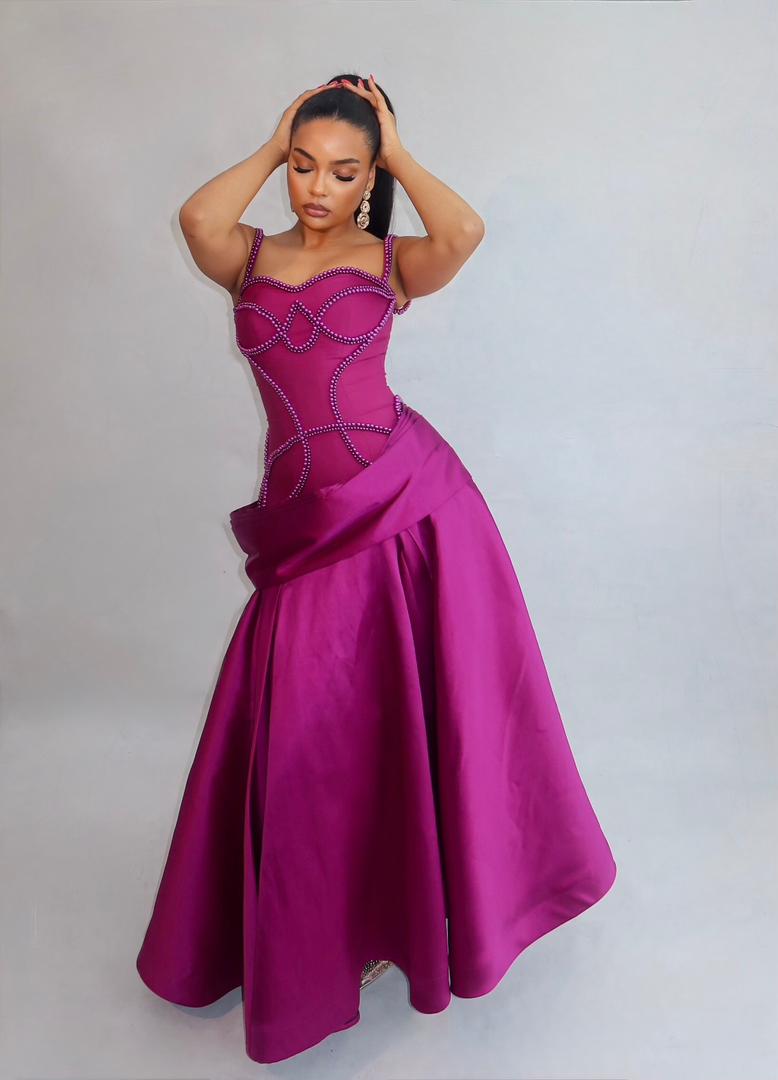
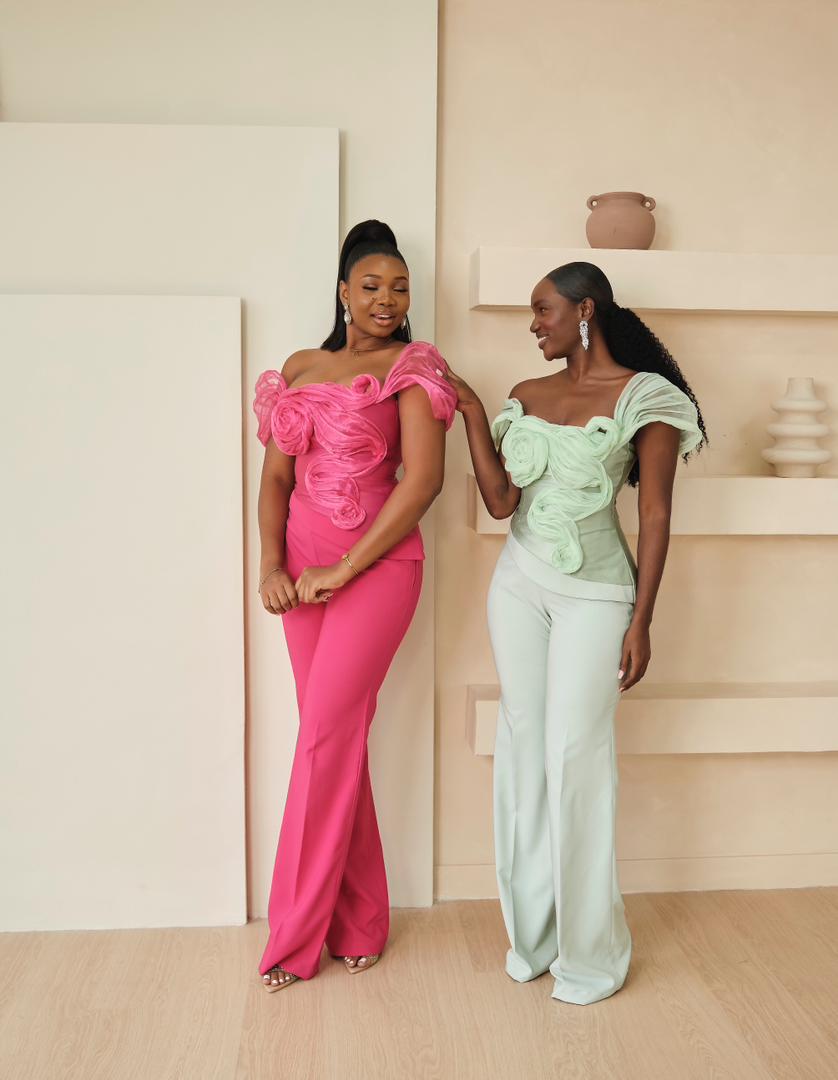
Moelle Essentials has carved a niche in occasionwear, reimagining what it means to dress up. It’s not just about sequins or silhouettes; it’s about emotion. The feeling of slipping into a dress that fits perfectly. The quiet excitement of looking in the mirror and saying, Yes, this is me.

With elegant fabrics, timeless cuts, and detail-oriented craftsmanship, Moelle’s creations are meant to stay in your wardrobe, and your memory for years to come.


The Future of Moelle

As Moelle Essentials continues to grow, one thing remains clear: the brand isn’t chasing trends — it’s setting a standard.

It’s about creating clothes that tell stories of women who rise, reinvent, and walk into every room like it was designed for them.

And in that story, Moelle Essentials isn’t just making dresses. It’s making statements — one confident woman at a time.


Connect with Moelle Essentials
Instagram: @moelleessentials
Website: www.moelleessentials.com

Small Bushman-Paradise | Namibia Rock-Art

Namibia rocks

Leaving the German town of Swakopmund, travel inland towards the Damaraland region of Namibia once inhabited by the ancient bushman.  It is here where you’ll score an awesome look into the art of the ancient civilizations (Thelifescape.com, 2014).  Small Bushman-Paradise | Namibia Rock-Art

Bushman's Paradise

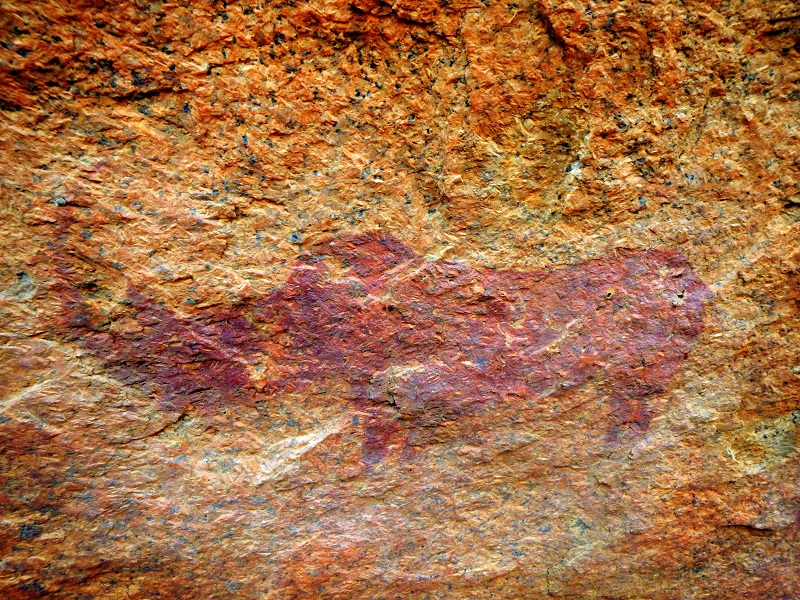
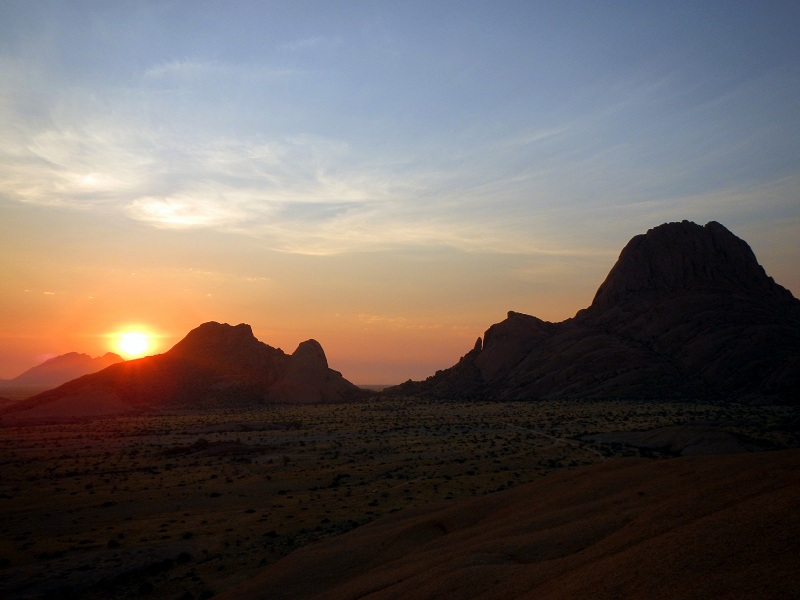
These paintings found at “Bushman’s Paradise” date back thousands of years but are still visible on the peculiar rock formations of this region.  The rock formations peak around 1800 meters above sea level creating impressive backdrops and awesome day climbing opportunities!

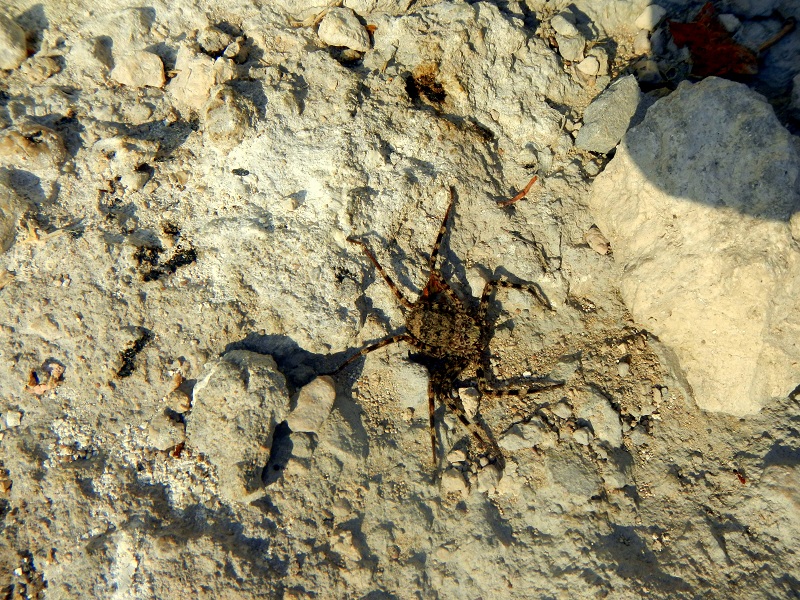
Don’t forget to keep an eye open for scorpions and spiders the size of small dogs.

Where to Stay?   Damaraland Bush Camp

What Makes this Camp Site Awesome?  Everything!  From the fact that all the proceeds from your camping fees go directly to the township of Damaraland to the fact that you will see the most incredible sunset to the fact that you have the ability to admire some ancient artwork of early Africans.  I mean who would mind a LUXURY bush toilet when you are in one of the world’s most breath-taking backdrops.  The only thing  we  I was not a fan of was the MASSIVE desert spiders. Blah!

Small Bushman-Paradise | Namibia Rock-Art

Namibia Rock Art 

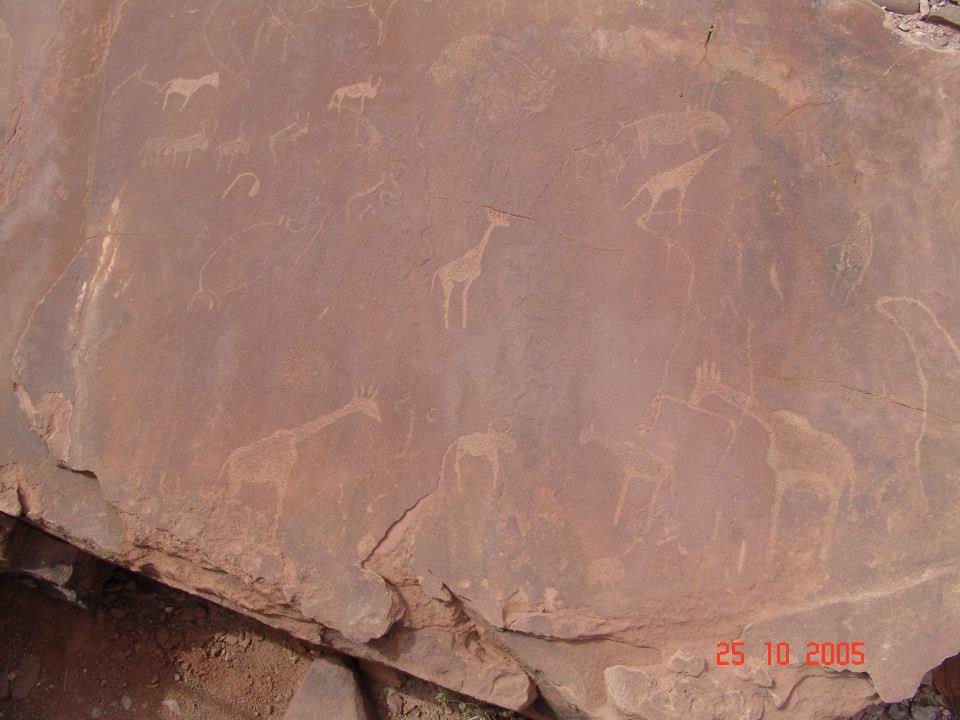
It is said that pictures, designs or images painted or engraved on the rock surfaces are generally referred to as “rock art”. These paintings are generally found on the walls of rock shelters (caves, etc.) which are formed in cliffs in the mountains. The engravings are also found on the large boulders and open surfaces of rocks lying lower on hillsides.  The images and ideas that were used by the ancient artists can differ from site to site (Nick Nolte, 2005).

Engravings on rock

History

In Southern Africa and particularly in Namibia the artists were mainly San (Bushmen) people. The age of rock engravings has been established to be from 2 000 to 6 000 years old while some painted pieces have been dated up to 27 000 years old.  One of the most famous rock engravings site in Namibia is Twyfelfontein (“Doubtful fountain”) in Damaraland where more than 2 500 images have been recorded as well as several paintings.

The engravings were first recorded in 1921 by R. Maack in the report written for the SWA Administration but the first detailed study of the site was conducted by Albert Viereck. The name was given to this place by David Levin, a sheep farmer, who moved there in 1947. There is a shelter where paintings of human figures can be seen. More interesting is the fact that both forms of rock art (engravings and paintings) can be found in Namibia unlike South Africa where they are mostly geographically separated with an exception of Northern Cape.

There is an opinion that old people used the engravings to teach there children about the animals and the strange circular images found at Twyfelfontein was used like a map to indicate water sources in the area. Twyfelfontein was proclaimed a national monument in 1952.

There is no certainty on the reasons why the rock art was made. Some experts believe that it were the pictured reminders of some events. Another purpose was representation of religious believes, ceremonies or even a trance experiences. It could also be a way of communication.

How long will it be with us? No doubt that the exposure to the elements is causing damage. Engravings become eroded and paintings fade. But the major threats to the rock art are humans. The best way of protection of the rock art is by not touching it at all. It is highly damaging to spray any liquid on the paintings and engravings.

Article (Small bushman paradise) by The landscape.

Article (Namibia rock art) by Nick Nolte

Sources: Thelandscape.comnicknoltesafaris.com


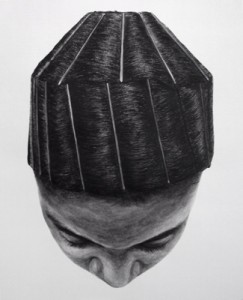
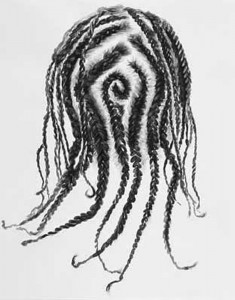
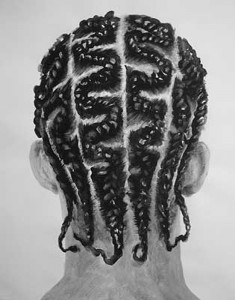
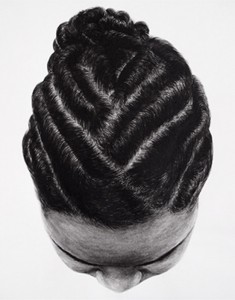
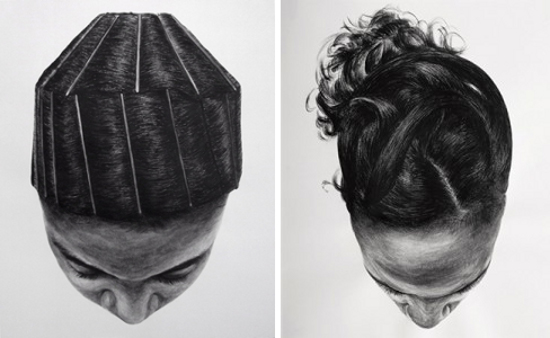
Portraits Of Hair By So Yoon Lym

Portraits Of Hair By So Yoon Lym - deneen3-243x300

So Yoon Lym is an artist, who was born in South Korea, but lived much of her youth in Uganda and Kenya.

Small wonder then that this part of her life has influenced her positively as an artist. She has claimed to be interested in hair styles and designs because it indicates ethnic, cultural and even political inclinations (Muse Origins, 2014).
Some of her artwork on hair design is shown below:

Portraits Of Hair By So Yoon Lym - miguel1-235x300

Portraits Of Hair By So Yoon Lym - ronay-jah1-235x300Portraits Of Hair By So Yoon Lym - chaquasha1-235x300

So Yoon Lym, Dreamtime, Hair, Black Hair

Source: http://museorigins.net/

How To Greet Yoruba Parents And Elders By Oyinbo African Abeni

In Africa there are many ways to greet parents and elders. In most parts of Africa, they  Kneel to their parents or elders.

What some people don’t know is greeting Yoruba parents or elders is different from the “normal” African Greeting. In the past Yoruba male children will greet their elders by laying down on the ground in front of their parent/elders and female will kneel on both knees with her hands at her back and greet them saying “Good morning ma/sir. Hope you slept well” etc. or what else you may like to add.

The elder will place their hand on the child’s head as they speak, you will then wait to be told to stand before you get up from the ground. Rushing up after saying good morning is not good and shows some kind of lack of respect. Unfortunately, a lot of Yoruba’s these days don’t greet their parents in this way, the more “modern” day way of greeting parents/elders is females going to them and kneeling on one knee and males bending over or dropping their hand to their feet. I guess as the years have gone past, things have changed lol!

Something you must NOT do, is walk up to an elder and shake there hand or hug them. This is a big NO GO! Kneeling is a sign of respect and culture so to just shake someone’s hand is like you are meeting a stranger. Even if it is your first time of meeting the person, this doesn’t mean you should shake there hand and see them as a stranger. So far as they are older than you are and they are Yoruba or even just African, then you should show your respect to them. Respect must ALWAYS be shown to elders. Anytime of any day.

Image

I would really advice youths of these days to practice their greetings more and not to become lazy in greeting elders lol, as a lot of young people these days have became lazy in greeting and just kneel a little not even to the floor, then get up and go. Its a real shame.

Yoruba parents and African parents will try to raise there children to have respect for their elders, so for a Yoruba kid to meet their auntie or uncle at home and just say “hi!” is really an embarrassment for the parents. I don’t mean the parents haven’t done a good job I mean the child is not playing their role well like they have been taught. So if you have been taught by your parents on how to greet and show respect, please make sure you do so when meeting elders.

No parent loves anything more than being praised on how well their child has been raised 😉

Thanks for reading and I hope you have learned a thing or two 🙂

Article written by Oyibo African Abeni

Source: oyinboafricanabeni.wordpress.com

People Of Africa By Oyinbo African Abeni

oyinbo african abeni - Bing images

My reason for this post today is mainly to let people know who don’t already know, how people from different Countries in Africa really are, as a lot of people judge people from Africa before even getting to know them!

I am NOT Generalizing Africa as a whole, I am talking based on MY experience with people from ALL over Africa not only one or two countries in Africa, this is why I used the term “People of Africa”..  This post is not about one country in Africa, its about MANY countries around Africa.

Another reason for this post is just to express how I feel about my friends from Africa and show them they are appreciated a lot by me. Most people from Europe or America or other parts of the world judge people from African Countries based on Bullshit lies! excuse my language!

Some of the most common things I have heard from people are;

“All Africans use white girls”

“All Africans live in slums”

“All Africans love money too much and scam everyone”

“All Africans are evil and kill children and do ‘voo-doo’

“All Africans cant speak English well”

“All Africans are under educated and living in Poverty”

And MANY more!

I have to say, I get very irritated around people who say such rubbish!

Let me just say, not all people from African Countries use white girls, Yes there may be some but believe me not ALL! There is many people from all over Africa who love someone for who there and that’s it! Just like every other race!

Also, let me just add, not all people in Africa love money and scam everyone.. that is rubbish! i think people judge Africa based on one or two stories they hear on the news! Also, most Africans cant speak English well?? What?? This is one of the stupidest ones i have heard, As all of my friends in Africa, weather they are Kenyan, Ghanaian, Nigerian or South African, Can speak AND write English very well, even some know English more than i do! lol

“All Africans are under educated” REALLY??? NO! Another huge judgmental LIE! The smartest people i know on this earth, are from Africa! ALL of my friends from countries in Africa are extremely smart and have GREAT potential.. Yes not everyone in some parts of Africa can afford good education but that does not make them dumb or stupid!

“All Africans kill children” Again, Really?? i really believe this one is from watching too much TV! People from African countries are not cruel and evil! Every country and continent has good and Bad people. Dont judge Africa based on hear say!

And NO! Africa is not all slums! look around and see how beautiful Africa REALLY is. Take your time to really explore countries in Africa to see how great they are.

I spend endless time trying to make my British friends see that there is soo many lovely and amazing people around Africa. Almost all of my friends are from countries in Africa and its been that way since childhood, also i have never dated any white or British guy, This is not because i hate British people but it is simply because i feel more happy and comfortable around my friends from Africa and also in relationships i feel that i am more connected to people from different countries around Africa and have more things in common and also they are very loving people. To say all countries and people in Africa are great would be a lie. Yes, not all people in Africa are great and there are many countries in Africa that have bad people just like every other continent in the world, but to judge people from Africa before getting to know them is one of the biggest mistakes people make.

For me i honestly do not know where i would be today if i didnt have my friends in Africa and in UK who have came from Nigeria and Ghana and Kenya etc. From a very very young age, i have grew with them close to me, like my brothers and sisters, friends is an under statement. they truly feel like family. Another thing i LOVE about people who have came from countries in Africa, They are EXTREMELY friendly when u meet them. They greet you in such a warm way and speak very politely to you. Also going to African markets/ restaurants in UK, is one great experience for me, because i get greeting nicely and treated very well.

I have friends from all over Africa but mainly in Nigeria, Kenya, Ghana, Gambia and south Africa. So based on the people i have met from there, i can honestly say Africa has some wonderful people! I can guarantee if you take the time to actually get to know people from different countries in Africa before judging them, you will realize how wonderful they really are, They will make you feel loved and appreciated in all you do. When i am having a bad day at work or any other situation, It is my friends in Nigeria, Ghana etc i turn to as they are always friendly, loving and supportive. They also keep me calm in hard situations! hehe countries in Africa are not full of scam artist and dying kids and people killing people! look beyond the bad things and see the wonderful things! Like i said before, Every Continent has good and bad.

Anyway, i feel like typing all day as i cant find the exact word to describe the people of Africa, but i have work in the morning and i have to get to bed hehe

Thanks for taking the time to read this and I hope you have learned something and made you think twice.

Article by Oyinbo African Abeni

Source: oyinboafricanabeni.wordpress.com

Source of picture: oyinbo african abeni – Bing images

Artisans Exhibiting At The Chevron Bazaar

Bellafricana was amongst a few artisans that were at the Chevron bazaar held in Lagos, Nigeria on the 13th of November, 2014. My team and I were there to represent Bellafricana including various other creatives present to exhibit from arts, crafts, sculpture, textile, gift items, paintings, beads, baskets and many more. Great talents in Africa I tell you.

I had to save some beautiful pictures to share with you. I absolutely love them all and I’m sure you will too.

Continue reading

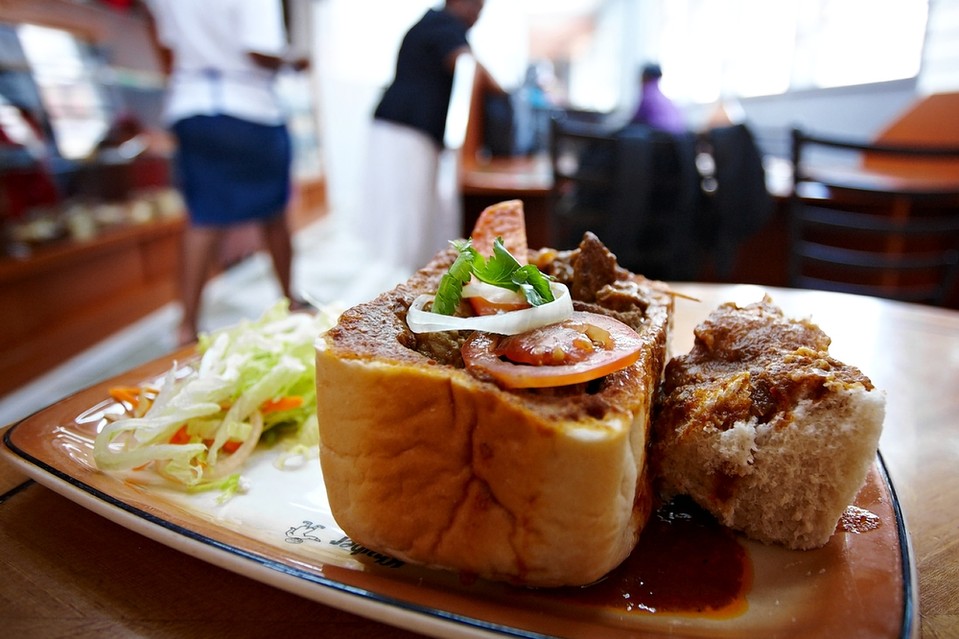
South African Street Food: Bunny Chow

OD-BA220_BUNNY_J_20131218170333

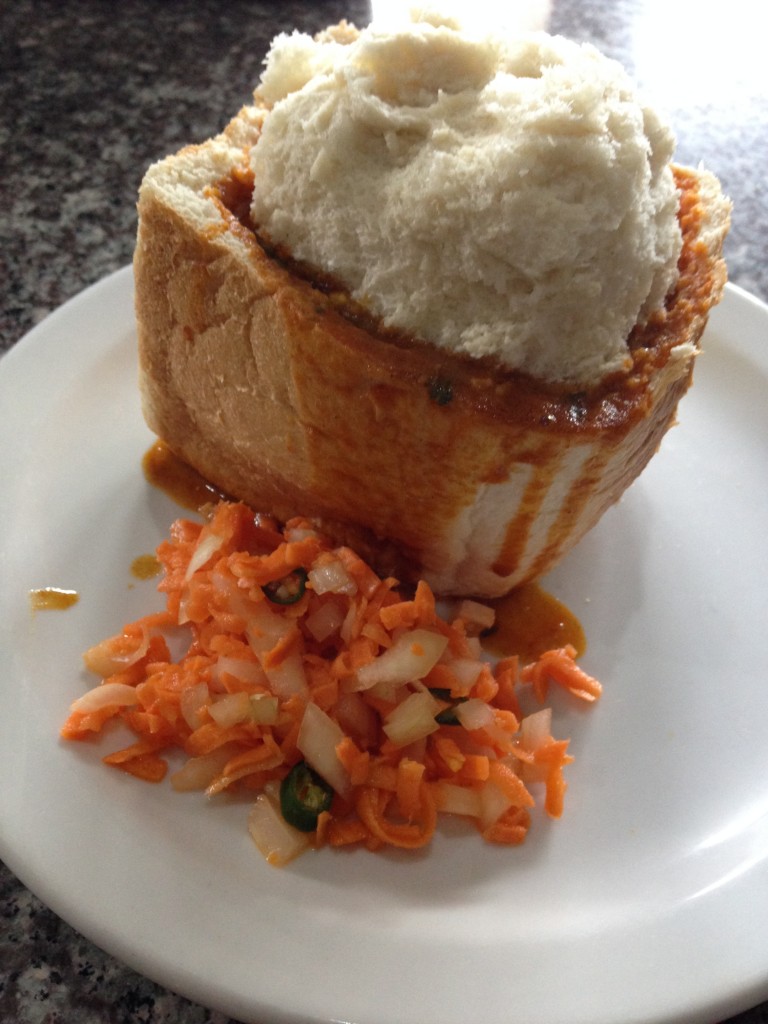
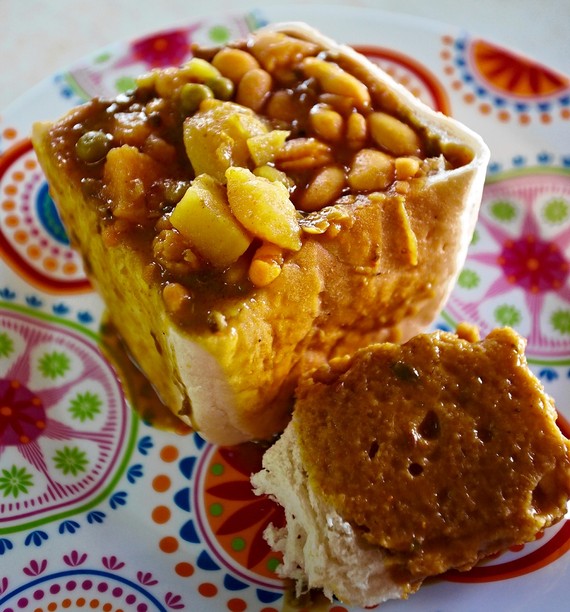
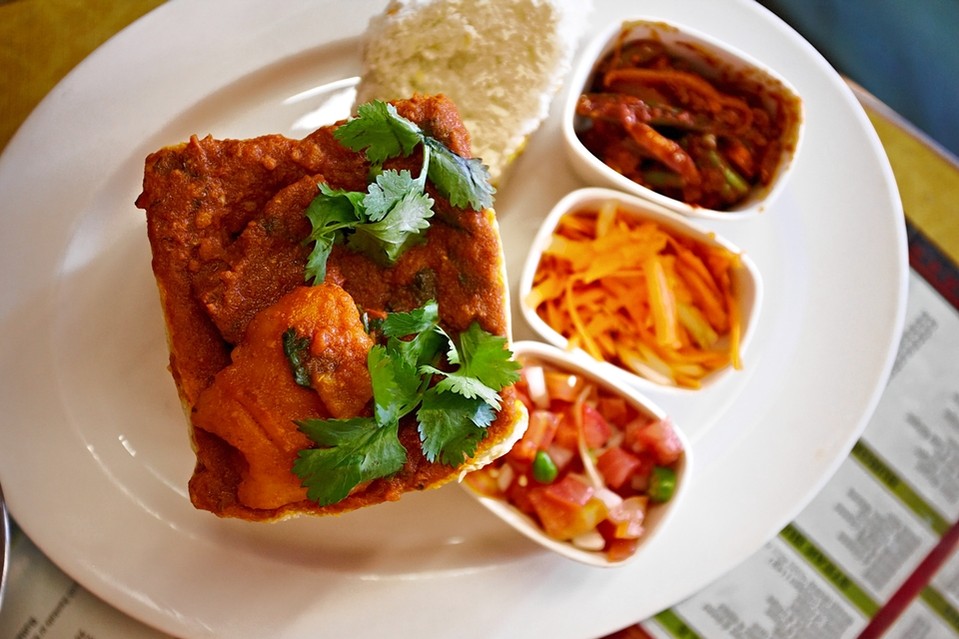
South African Street Food: Bunny Chow. No one knows how bunny chow came to be named, but what is certain is that this hollowed-out half- or quarter-loaf of white bread filled with a blistering-hot curry is one of South Africa’s most treasured street foods.

Bunny chow at Gounden’sOD-BA223_BUNNY_OZ_20131218170646

Bunny chow became popular in South Africa in the 19th century where some Indian labourers who worked in a sugar-cane field brought it with them. The Indian laborers brought the meat and vegetable curries that fill bunny chows to South Africa. The dish is an essential in Durban, the seaside epicentre of South Africa’s ethnic Indian community. This South African Street Food: Bunny Chow has certainly made a name for itself.

If you don’t go to Table Mountain, you haven’t been to Cape Town,” said Nelson Nundoo, whose family has operated Oriental, a local Indian restaurant, for three decades. “If you don’t eat a bunny, you haven’t been to Durban.

The travelling table mentioned that ordering bunnies in South Africa has it’s protocol. If you are looking for the best place to eat, ask for where to find ‘bunnies’, not bunny chow. When ordering ask for the size and type of meat…quarter mutton, not mentioning bunnies at all.

OD-BA222_BUNNY_J_20131218170530

The best bunnies contain more meat than potatoes and employ bread that is soft and fresh enough to let the sauce soak deep into the bottom crust. The spice mix—which typically includes cumin, turmeric, fennel and cardamom—should be complex but not so fiery that it sends you reeling. The best bunnies come from Durban.

If you are ever visiting South Africa, be sure to have a taste of bunny chow…

Recipes for Bunny Chow (culled from thetravellingtable.com)

Serves 4

Prep time 35 minutes

3 tablespoons ghee or butter
1 medium onion, chopped
3-4 cloves garlic
1 tablespoon minced ginger
2 skinless/boneless chicken breasts, cut into 1-inch pieces
2 tablespoons tomato paste
1 teaspoon black mustard seed
1 teaspoon coriander seed
1 teaspoon turmeric
2 teaspoons mild curry powder
Pinch of cayenne pepper
1 cup chicken stock
1/2 red bell pepper, diced
1/2 small head cauliflower, cut into small florets
1/4 cup coconut milk

1 loaf unsliced bread or 4 large rolls

Melt the ghee or butter in a large skillet. Add the onion, garlic and ginger and saute until dark brown. Then add the chicken breast pieces and brown on both sides, followed by the tomato paste and mash around on the bottom of the pan to brown. Put in the spices and toast for a minute or so, stirring constantly. Thereafter, add the chicken stock and vegetables. Bring to a boil, lower the heat, cover and simmer for 10 minutes until the vegetables are tender and the chicken is cooked. Turn off the heat and add the coconut milk.

Cut an unsliced load of bread into 4 pieces or cut tops off the rolls. Hollow out the centers and serve the curry in the bread bowl. Place the bread that you have torn out (the virgin) on top.

Article by : Patrick McGroarty

Source for recipe: thetravellingtable.com

Source of picture: https://www.wsj.com/articles/SB10001424052702304858104579262350702040112

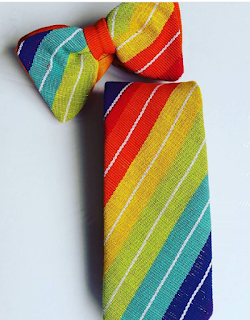
Aso-Oke Inspired Tie By Ty-Tys

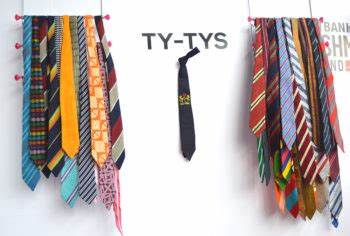
Aso-Oke Inspired Tie By Ty-Tys

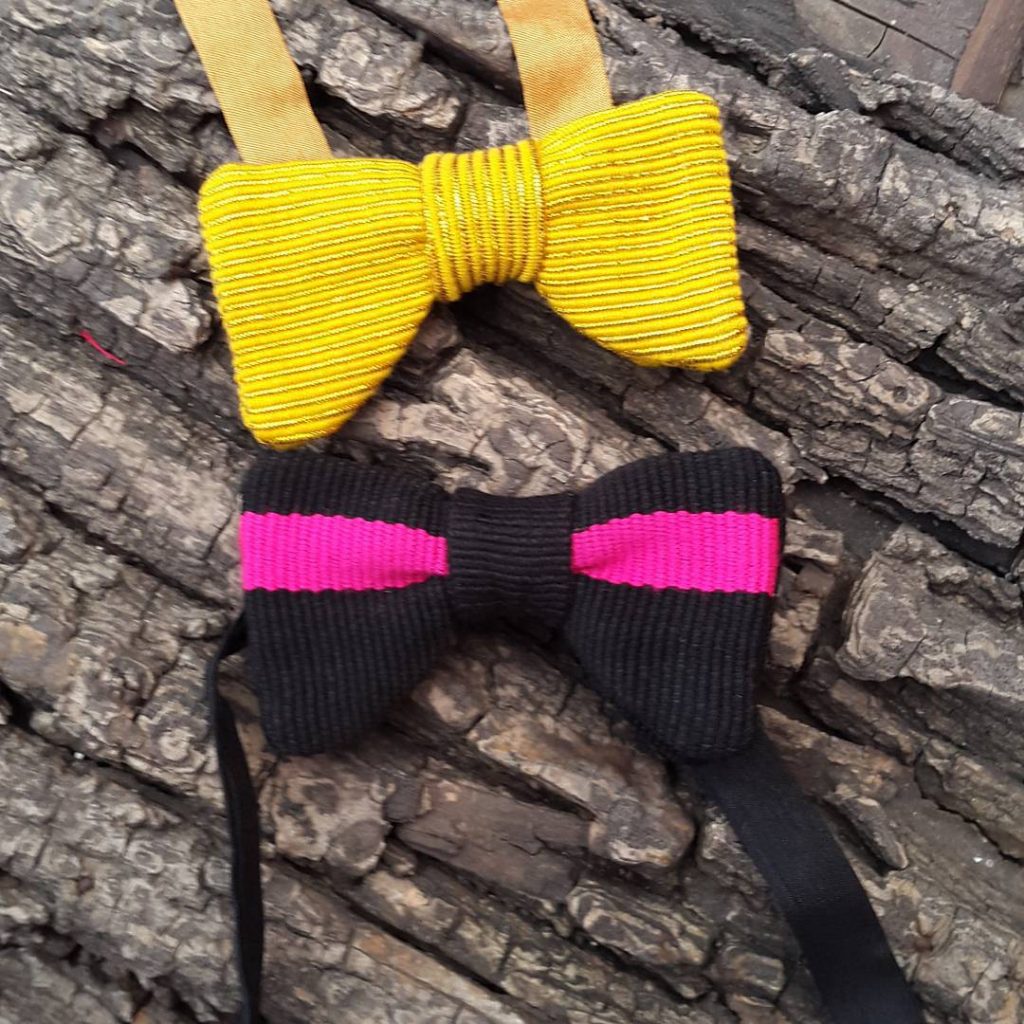
Aso-oke has in recent times become more versatile in its use and is no longer limited to its traditional uses. The cloth is fast evolving into the fabric of choice for cutting edge fashion and trendy accessories in different countries and world regions.

Vibrant Aso Oke Bowties by Ty-Tys Designs

Ademiluyi did something creative with neckties! Instead of cotton or usual silk materials that ties are often made of, he decided to make ‘Aso-oke neckties’, a hand loomed cloth intricately woven predominantly by the Yoruba people, using techniques that were developed centuries ago and passed down through generations.

Vibrant Aso Oke Bowtie & Tie by Ty-Tys Designs

The Yoruba people are from Southwest Nigeria. With a population of over 30million, they are also found in many West African countries and diasporic communities all over the world. The Yoruba people wear Aso-oke fabrics sewn in traditional styles on special occasions such as weddings, birthdays or christenings. Ty-tys neckwear is hand made and can be customized to meet your needs.

Source: http://kemiogunniyi.wordpress.com/2012/08/06/fashion/

https://mariamtijani.com/aso-oke-trend-vibrant-stripes-season/

https://www.kemimobuse.com/2017/09/i-am-lawyer-by-profession-and-i-make.html

To reach Ty-Tys, call +234 805 054 0564 or email info@ty-tys.com or visit www.ty-tys.com

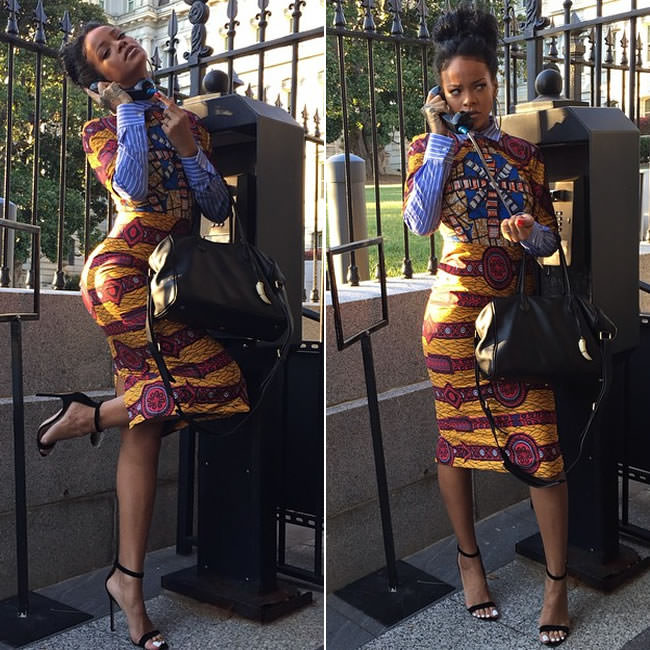
Rihanna Class Up In Stella Jean Ankara Print Dress

rihanna-stella-jean-ankara-print-layered-dress

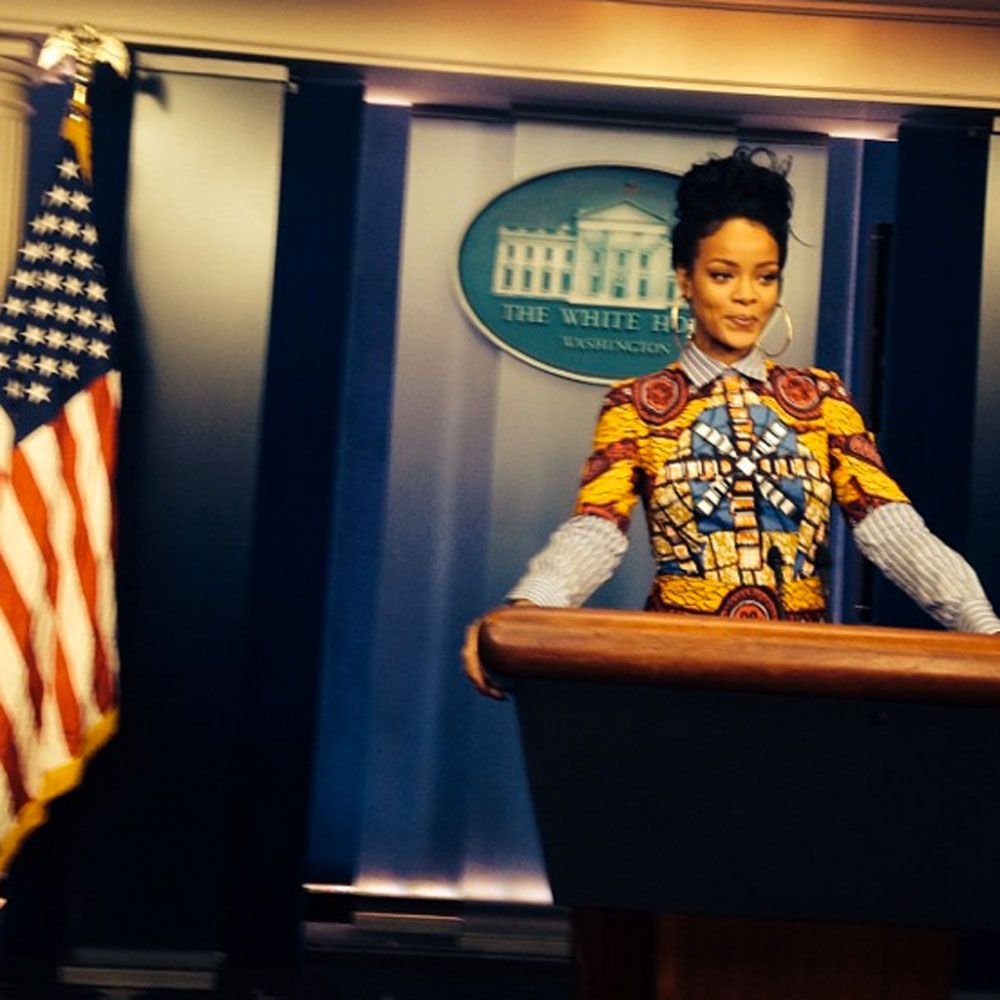
Rihanna Class Up In Stella Jean Ankara Print Dress and what a moment it was! Rihanna visited the white house wearing one of Stella Jean fall 2014 collection. She looks cute and classy in this and well put-together here.

rihanna-stella-jean-ankara-print-layered-dress

I just love the African influence, creativity and colours infused within each piece.

I love how this Stella Jean ‘Barbara’ sheath dress marries traditional African print with a borrowed-from-the-boys Wall-Street-esque striped collar and sleeves for eye-catching contrast.

This colourful look is from Stella Jean‘s Fall/Winter 2014 collection


https://www.bing.com/images/search?q=rihanna+class+up+in+stella+jean+ankara+print+dress&qpvt=Rihanna+Class+Up+In+Stella+Jean+Ankara+Print+Dress&FORM=IGRE

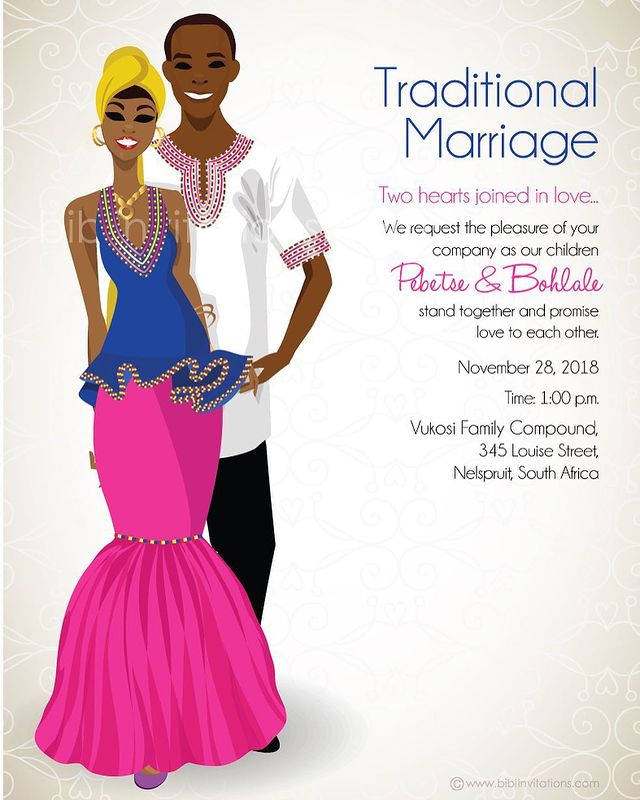
African Inspired Wedding Invitations

BIBI-INVITATIONS - SOUTH AFRICAN

African Inspired Wedding Invitations are truly exceptional… 

[dropcap custom_class=”normal”] I am Absolutely in Love with Bibi Invitations. All African Inspired Wedding Invitations. Bibi Invitations, a Winnipeg, Canada based African Wedding Invitation Company, is the brain child of 2 female Nigerian entrepreneurs. They made a decision to create a collection of wedding invitations that was a reflection of their bold an effervescent nature as Africans. [/dropcap]

Ify, a multimedia designer whose love for sumptuous African fabrics such as Aso Oke, Kente, Akwete, Ankara, Bogolanfini (Mud cloth) has evolved to the creation of their exquisite collection of invitations.

Continue reading

ArtHouse Contemporary November Auction

Igi Araba : Yusuf Grillo - 3-1-228x300

Friday night in Lagos usually spells ‘TGIF’, hanging out, social events and the like. No one wants to have a ‘dulling weekend’.

But Friday the 31st of October, in the Lagos art scene, had a different event in store. Art-lovers were treated to The ArtHouse Auction cocktail!

ArtHouse Contemporary Limited, a leading auction art company in Nigeria, organized a weekend-long event for the auction at The Wheatbaker Hotel, Ikoyi.

Kicking-off the weekend was the ArtHouse Cocktail on Friday 31st of October. This featured a preview of the artworks to be auctioned, refreshments, as well as an opportunity to network with fellow guests. The auction catalogues, and previous editions, were available for sale at the venue. It was the ideal environment to view the latest artworks by both upcoming artists and the great artists of West Africa.

Just picture a nice drink in hand, auction catalogue in the other, and having a first-hand insight into the minds of leading artists in West Africa through their artworks. After all, their art was the reason for the gathering. Some individuals had an expression of deep understanding of the works, a few took a step back in order to understand the concepts better, and others were engrossed in passionate discussions about particular artworks that caught their interest.

Being able to peruse works of the likes of Peju Alatise, Ben Enwonwu, Kofi Aghorsor, Sokari Douglas-Camp, etc.; definitely an art-lover’s ideal way to start the weekend. Wooden sculptures, oil paintings, woven artwork, beaded work, photographs, steel work; you name it. Regardless of the form of art one finds favorable, there was something for everyone.

The auction itself was an interesting experience. Slightly more formal than the cocktail. It took place on Monday 3rd of November. The organizers kept to time as much as possible and, along with the auctioneer, made the auction sale a smooth event. Auction catalogue in hand, most people were sure to mark their favorite artwork and make notes of the eventual sale price.

For more information on ArtHouse Contemporary Limited and the auction, visit www.arthouse-ng.com.

To the avid art-lovers out there, like myself, be sure not to miss out on the next auction slated for next year.

Layo Bright

https://arthouse-ng.com/exhibitions/transgrexion-george-osodi

Transgrexion: George Osodi-g3-300x200

STEPS TO MAKING

Massive Progress in your Business

Subscribe to get the free guide and learn step-by-step exactly what you need to achieve your goals.